
 0
0
 0
0
The second half of the year always feels like smartphone season: a slow build of leaks, a scatter of mid-year launches, then a flurry of big reveals that reshape the market for the next twelve months.
In this article I’ll walk you through the devices that are stirring the most excitement, explain the trends that matter, and share practical advice drawn from years of upgrading phones and living with prototypes and review units.
Why the second half of the year matters
Manufacturers time major launches to capture holiday sales and set the tone for the year ahead. That clustering means the final months often bring the most consequential devices and the clearest picture of where mobile technology is headed.
Beyond marketing calendars, chip cycles and supply chains also shape when phones arrive. Flagship silicon, advanced camera components, and new display tech tend to roll out in synchronized waves, so late-year phones often pack the freshest hardware.
For consumers the payoff is practical: better choices. Waiting until the second half of the year usually means clearer comparisons, deeper discounts on older models, and a stronger sense of whether a new device genuinely moves the needle.
Apple: iPhone 16 and the evolution of the lineup
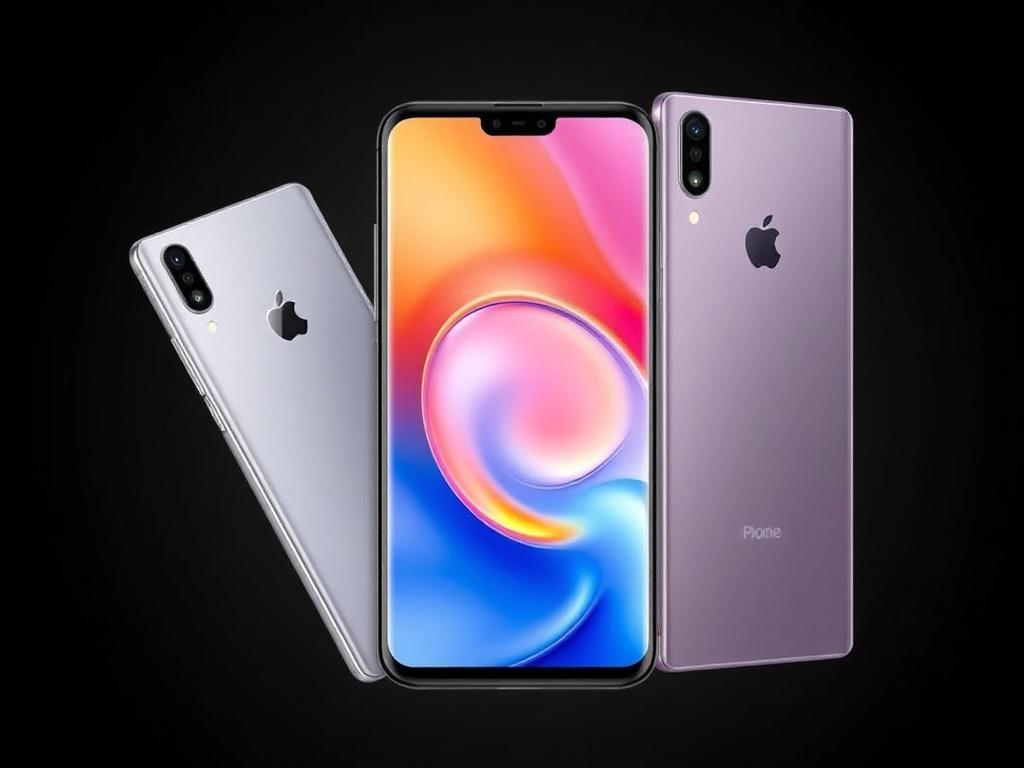
Apple’s fall releases are reliably the centerpieces of the season, and talk about the iPhone 16 family tends to dominate the rumor cycle. Analysts and supply-chain leaks have hinted at modest design updates alongside more meaningful camera and software features.
One persistent thread in reporting focuses on camera hardware improvements, especially for the Pro models. Periscope zoom lenses and larger sensors are the kinds of upgrades that would matter to photography-focused buyers.
Software is equally important: Apple keeps improving computational photography and on-device intelligence. Even without dramatic hardware leaps, tighter integration between cameras, sensors, and iOS features can produce visibly better photos and smarter battery use.
Design and hardware expectations
Reports around new iPhone generations typically include iterative refinements: thinner bezels, reduced notch or Dynamic Island adjustments, and subtle chassis changes. These are rarely revolutionary, but they add up in daily feel and ergonomics.
Battery and charging are areas to watch. While Apple is conservative with radical changes, the company has prioritized battery life improvements through software tuning and efficiency gains in recent years.
Camera and on-device intelligence
Apple’s camera roadmap shows continued focus on computational features that make photos easier to capture in difficult lighting and more consistent across lenses. Expect software features to lean on local processing to preserve speed and privacy.
I’ve tested iPhones that showed how much difference software alone can make. A new lens is exciting, but often the daily improvement you notice comes from smarter HDR, better night modes, and faster image processing.
Google: Pixel models and AI-driven software
Google’s Pixel line has carved an identity around computational photography and software-first features. New Pixel flagships typically arrive in the fall with upgraded silicon and fresh camera or AI capabilities.
What sets Google apart is its approach to on-device intelligence. Rather than simply increasing camera megapixels, Google emphasizes practical features—clearer portraits, smarter voice assistants, and tools that simplify routine tasks.
Rumors usually point to improved sensors and tighter hardware-software synergy. If history is a guide, even modest hardware bumps can enable noticeable leaps in image quality and new AI-driven utilities.
AI features and real-world utility
Google often showcases features that feel like small magic: live translation, AI-assisted editing, on-device transcription. Those capabilities matter most when they save time or make content more usable without requiring cloud processing.
I’ve used voice-to-text and instant translation in real conversations—and in those moments, the value is immediate. The next Pixel models will likely expand these tools, making them faster and more accurate while preserving privacy with local processing.
Samsung: foldables, Galaxy S updates, and where innovation lands
Samsung maintains a two-pronged strategy: early-year Galaxy S flagships and mid-to-late-year foldable updates. That cadence means the latter half of the year often introduces the newest foldables or iterative upgrades to the Z series.
Foldables remain Samsung’s showcase for bold experimentation. Screen tech, hinge durability, and creative software features are all on display, and each generation reduces compromises that once held the category back.
At the same time, Samsung’s design and camera improvements on traditional flagships continue to push pixel-level competition. They balance cutting-edge experiments with reliable all-round performance for mainstream buyers.
Galaxy Z Fold and Flip expectations
Expect thinner profiles, sturdier mechanisms, and better outer screens in new Z Fold or Flip models. Manufacturers refine hinge designs iteration by iteration, and those refinements translate to a more usable daily device.
Software is the other lever Samsung uses to make foldables more compelling. Multi-window workflows, improved app continuity, and tablet-like experiences on the go are areas where practical gains are often delivered.
Chinese flagships to watch: Xiaomi, OnePlus, Oppo, Vivo
Chinese manufacturers regularly pack aggressive hardware into their flagships, undercutting price points that used to be the exclusive domain of premium brands. That competition raises the baseline across the market.
These companies often target late-year launches with top-end specs: innovative charging tech, high-refresh displays, and camera modules tuned for detail and low-light performance. They also push price-performance boundaries in ways that influence global strategies.
Special models—like camera-focused variants or hyper-charged battery editions—often arrive in the autumn, giving buyers options that target specific needs rather than a one-size-fits-all flagship.
What to expect from these brands
Xiaomi and OnePlus continue to emphasize raw value: flagship chips, premium displays, and fast charging at more accessible prices. For many buyers those are compelling trade-offs against brand recognition or long-term software support.
Oppo and Vivo lean into camera innovation and industrial design. Expect shaper camera systems, novel sensor combinations, and finishes that feel distinct from the usual matte or glossy choices.
Gaming phones and niche flagships: performance beyond benchmarks
Gaming phones—models from brands like Asus’s ROG series or Lenovo’s Legion line—are where raw performance, thermal engineering, and input refinements converge in visible ways. They often release mid-to-late year with specialized accessories and display tech.
These devices are about more than benchmarks. Active cooling, shoulder triggers, and fast touch sampling rates directly affect gameplay. For users who play competitively or stream, these features justify a niche purchase.
On the camera and imaging side, niche brands sometimes release dedicated camera phones that pair Leica, Hasselblad, or other camera-brand collaborations with bespoke imaging pipelines. Those models can be fascinating if photography is your priority.
Camera tech trends to watch
Lens hardware is important, but so is the pipeline that turns raw data into finished images. Expect improvements in multi-frame processing, better per-lens calibration, and more flexible “pro” shooting modes that don’t require a photography degree.
Periscope zooms are the single most significant hardware trend for long-range photography. They let manufacturers offer tenable optical zoom while keeping phones slim, and more models are expected to adopt the technology.
Night and low-light photography keep improving thanks to advanced stacking algorithms and more sensitive sensors. Even in mid-range devices you’ll see features that once belonged exclusively to flagships.
Display and refresh rates: smoother everywhere
High refresh rates have trickled down from flagships to mainstream phones. Adaptive displays that shift from 1Hz to 120Hz depending on content are becoming standard on premium devices and increasingly common on mid-range hardware.
OLED panel refinement continues, with better peak brightness, improved color fidelity, and reduced burn-in risk. Foldables are also benefitting from flexible OLED improvements that make inner screens brighter and more durable.
For buyers who consume a lot of video or play fast-paced games, display quality remains one of the most tangible daily improvements a new phone can deliver.
Battery, charging, and practical longevity
Battery life is a quiet battleground. Manufacturers juggle higher-performance chips and brighter displays against the need for all-day usage, and software efficiency plays a pivotal role in achieving that balance.
Fast charging continues its evolution, with some brands offering wired speeds that replenish a device quickly and others pushing wireless charging flexibility. The real-world benefit depends on how often you can plug in and whether you favor battery capacity over thinness.
Sustainability and repairability are gaining attention. Swap-friendly designs, longer update commitments, and recycling programs are increasingly part of purchasing deliberations for informed consumers.
On-device AI: the software revolution you’ll notice
AI on devices is more than a marketing buzzword. On-device AI can accelerate photo editing, enable smarter voice assistants, and compress tasks that previously required cloud processing into an immediate, private experience.
Look for features that reduce friction: instant search through your photos, automatic summarization of long messages, and camera modes that suggest framing or scene adjustments in real time.
These capabilities feel different from raw spec increases because they change how you use the phone rather than just how fast the phone runs benchmarks.
Who should consider upgrading and when
Upgrading usually makes sense when your current phone can’t meet your daily needs—poor battery life, broken hardware, or lack of necessary features like modern 5G bands or camera capabilities you rely on.
If you’re on the fence, time purchases around announcements. Historically, the months after a flagship launch are when trade-in deals and discounts hit hardest, making it the smart move for value-minded buyers.
For early adopters who value the first wave of features, pre-orders and launch events offer benefits like trade-in credit and limited accessories. I’ve pre-ordered twice in the past five years when a new camera feature or foldable design justified the risk, and both times the early access paid off for my workflow.
A practical comparison table (rumored and expected)
The table below summarizes the broad expectations for several of the devices creating the most buzz. Treat the entries as general guidance rather than confirmed specifications.
| Device (rumored) | Key expected feature | Why it matters | Timing (typical) |
|---|---|---|---|
| iPhone 16 series | Improved Pro camera system, incremental design tweaks | Better zoom and computational photography for everyday use | Fall (September-ish) |
| Google Pixel (next gen) | On-device AI tools and refined camera processing | Smoother AI features and improved image consistency | Fall |
| Samsung Galaxy Z fold/flip (new) | More durable hinge, brighter inner display | Better multi-tasking and increased daily reliability | Late summer / fall |
| Chinese flagship (Xiaomi/OnePlus/Oppo/Vivo) | High refresh displays, fast charging, aggressive pricing | High value for hardware-hungry buyers | Fall launches common |
| Gaming phones (Asus ROG, etc.) | Advanced cooling, high sampling rate displays | Better sustained performance for mobile gaming | Mid-to-late year |
How to evaluate the noise: separating meaningful upgrades from marketing
It’s easy to be dazzled by headlines—“new sensor,” “bigger battery,” “ultrafast charging”—but the real test is whether the change affects your everyday life. Ask whether a rumored feature will alter how you use your phone day-to-day.
For example, an extra megapixel rarely matters, but a real periscope lens or a new form factor like a thinner foldable cover screen can change photo habits and multitasking in tangible ways.
Read hands-on reviews from multiple sources and watch long-term battery and durability tests. Early impressions can be optimistic; longevity testing exposes the trade-offs that matter most in ownership.
Pre-order strategies and timing
Pre-orders can secure early delivery, promotional bundles, or exclusive colors, but they’re also where most manufacturers test supply and gauge demand. If you need a phone immediately, pre-ordering makes sense; if not, waiting usually brings better pricing and clearer reviews.
Trade-in programs are an important part of the calculation. Many companies inflate trade-in values at launch, which can tilt the decision toward early purchase but may not be the best deal in the long run.
From personal experience, I’ve found the ideal balance is to pre-order only when the new feature set aligns with a clear pain point—my older device failing, a missing camera capability, or a work requirement for certain apps.
Software support and long-term value
Software updates extend the useful life of a phone more than any single spec. Brands that promise longer OS updates offer better long-term value, even if their initial price is slightly higher.
Check manufacturer commitments to Android version updates and security patches, or Apple’s multi-year iOS support window. If you plan to keep a device three to four years, software longevity should influence your choice.
Real-life example: a phone I kept for three years felt faster after major software optimizations that improved multitasking and battery behavior, proving that updates can effectively refresh older hardware.
Accessories and ecosystem considerations
Your experience depends on more than the phone itself. Ecosystem—earbuds, watches, chargers, and cloud services—changes how valuable certain devices feel. Seamless pairing and shared features can tip the balance toward one brand.
If you already own a smartwatch or smart home devices tied to a particular ecosystem, that integration can be a decisive factor. Look beyond isolated specs and think about how a new phone will fit into your daily tech habits.
For people who switch ecosystems, plan for transitional hassles: migrating messages, app purchases, and wearable pairings can take time, and sometimes services don’t fully replicate across platforms.
Durability: real-world considerations
Advances in glass and coatings help, but the real test of durability is how a phone tolerates everyday drops, temperature swings, and constant charging cycles. Ruggedized glass and IP ratings are helpful metrics, but they don’t tell the whole story.
Cases still matter. Even the most premium phone benefits from a well-designed case that preserves grip and mitigates impact. For foldables, a case that protects the hinge is essential.
I’ve seen foldables recover from brief drops better than I expected, but repeated stress and dust ingress have left others with hinge issues. If durability is a priority, seek long-term durability tests before committing.
Carrier vs. unlocked: what to consider this year
Carrier deals can be tempting because they lower upfront costs. The downside is potential bloatware, locked bootloaders, and slower software updates. Unlocked phones tend to get updates sooner and offer more flexibility for international travel.
If you rely on specific carrier features—like Wi-Fi calling or carrier-branded services—verify compatibility before buying unlocked. For frequent travelers, an unlocked phone is often the smarter investment.
Whichever route you pick, read the fine print on trade-ins and financing. A promotional offer tied to a multi-year contract might look cheap up front but cost more over time.
Regional availability and timing nuances
One reality of big launches is staggered availability. A phone announced globally might arrive in certain markets weeks or even months later, depending on regulatory approvals and supply decisions.
If you live outside major launch markets, plan for potential delays and factor that into any upgrade timetable. Sometimes waiting a few weeks results in better local pricing or bundled accessories that weren’t available at initial launch.
Monitor official regional pages and trusted local retailers rather than relying solely on global announcements to understand when a device will truly be on shelves where you live.
Price expectations and what represents good value
Flagship prices have trended upward, but value can be found by aligning needs with device strengths. If you primarily use your phone for photos, prioritize camera innovations; if battery life matters most, target models that emphasize capacity and efficiency.
Older flagships and previous-year models often drop in price substantially after new launches. For many buyers, a last-year flagship captures most flagship features at a much better price.
In my experience, the best value purchases have come from buying the previous generation after a new model lands—same ecosystem, mature software, and often a better price-to-performance ratio.
Tips for photographers and content creators
If photography or short-form video is your priority, look for phones with flexible zoom options, manual controls, and good stabilization. A larger sensor and periscope zoom will matter more than slight increases in megapixel count.
Audio quality is also important for creators. Wind suppression, stereo recording, and consistent audio capture across microphones will save editing time later.
Test the editing pipeline on-device. Some phones offer fast local editing that speeds up content creation, while others rely heavily on third-party apps or cloud services.
Enterprise and security considerations
For business users, device management, security updates, and encryption support may outweigh headline specs. Brands that offer robust enterprise support and faster security patching are preferable in corporate environments.
Consider biometric options and secure enclave features if you handle sensitive data. Regular security updates and granular admin controls are more valuable than a small CPU bump in these contexts.
Ask your IT team about compatibility with corporate VPNs and mobile device management solutions before selecting a new phone for work.
Final thoughts and how to choose wisely
The Most Anticipated Mobile Phones Coming Later This Year promise a blend of hardware refinement and software-driven features. What matters most is which improvements will change your day-to-day experience versus what’s merely interesting as a spec.
Decide what you can’t live without—battery life, camera zoom, a foldable screen—and let that priority guide your purchase timing. For many people, waiting for post-launch reviews and price adjustments delivers the best balance of value and confidence.
When the announcements roll in, compare hands-on impressions, assess real-world battery and durability testing, and consider ecosystem fit. If you want a recommendation tailored to your use, I can walk through your priorities and map them to the best options expected this year.


